Showing posts with label Info. Show all posts

The End of Space Shuttle Program

The end of the space shuttle program does not mean the end of NASA, or even of NASA sending humans into space. NASA has a robust program of exploration, technology development and scientific research that will last for years to come. Here is what's next for NASA:

Exploration
NASA is designing and building the capabilities to send humans to explore the solar system, working toward a goal of landing humans on Mars. We will build the Multi-Purpose Crew Vehicle, based on the design for the Orion capsule, with a capacity to take four astronauts on 21-day missions.


Multi Purpose Crew Vehicle
The Multi Purpose Crew Vehicle ground test article. Credit Lockheed Martin 
 

We will soon announce the design for the heavy-lift Space Launch System that will carry us out of low Earth orbit. We are developing the technologies we will need for human exploration of the solar system, including solar electric propulsion, refueling depots in orbit, radiation protection and high-reliability life support systems.

International Space Station
The International Space Station is the centerpiece of our human spaceflight activities in low Earth orbit. The ISS is fully staffed with a crew of six, and American astronauts will continue to live and work there in space 24 hours a day, 365 days a year. Part of the U.S. portion of the station has been designated as a national laboratory, and NASA is committed to using this unique resource for scientific research.

The International Space Station is featured in this image taken after Endeavour's departure
The International Space Station in May 2011. Credit: NASA


The ISS is a test bed for exploration technologies such as autonomous refueling of spacecraft, advanced life support systems and human/robotic interfaces. Commercial companies are well on their way to providing cargo and crew flights to the ISS, allowing NASA to focus its attention on the next steps into our solar system.

Aeronautics
NASA is researching ways to design and build aircraft that are safer, more fuel-efficient, quieter, and environmentally responsible. We are also working to create traffic management systems that are safer, more efficient and more flexible. We are developing technologies that improve routing during flights and enable aircraft to climb to and descend from their cruising altitude without interruption.

Image of a cockpit on an airplane.
The Research Flight Deck is being used to develop safer and more efficient cockpit technologies. Credit: NASA


We believe it is possible to build an aircraft that uses less fuel, gives off fewer emissions, and is quieter, and we are working on the technologies to create that aircraft. NASA is also part of the government team that is working to develop the Next Generation Air Transportation System, or NextGen, to be in place by the year 2025. We will continue to validate new, complex aircraft and air traffic control systems to ensure that they meet extremely high safety levels.

Science
NASA is conducting an unprecedented array of missions that will seek new knowledge and understanding of Earth, the solar system and the universe. On July 16, the Dawn spacecraft begins a year-long visit to the large asteroid Vesta to help us understand the earliest chapter of our solar system's history. In August, the Juno spacecraft will launch to investigate Jupiter's origins, structure, and atmosphere. The September launch of the National Polar-orbiting Operational Environmental Satellite System Preparatory Project is a critical first step in building a next-generation Earth-monitoring satellite system.

Juno Mission to Jupiter (2010 Artist's Concept)
The Juno mission to Jupiter is set to launch in August 2011. Credit: NASA


NASA returns to the moon to study the moon's gravity field and determine the structure of the lunar interior with the October launch of GRAIL. In November, we launch the Mars Science Laboratory named Curiosity on its journey to Mars to look for evidence of microbial life on the red planet. And in February 2012, we will launch the Nuclear Spectroscopic Telescope Array to search for black holes, map supernova explosions, and study the most extreme active galaxies.


source: http://www.nasa.gov/about/whats_next.html


Ice Cream Ball - Play & Freeze Maker

How to make ice cream in this clever contraption.


Ice Cream Ball - Play & Freeze Maker
Just when you thought making ice cream was old hat, someone comes out with a cool contraption that makes you work for your dessert. With the Play & Freeze Ice Cream Maker, there's no need for electricity. Just add ice and rock salt in one end and ice cream mix in the other end--then have a ball as you shake it, pass it, or roll it. The ice cream mix can be as simple as cream, sugar, and vanilla, but the footwork on the ball is all you.

    Materials

    The Play & Freeze Ice Cream Maker comes in two sizes - standard and mega. You'll also need the ingredients to make ice cream. Here's the basic vanilla recipe...

    Basic Vanilla Ice Cream

    • 1 pint of Half & Half*
    • 1 1/2 teaspoons vanilla
    • 1/3 cup + 2 Tablespoons sugar
    • Ice
    • Rock salt
    *Using whole cream makes a richer, creamier ice cream. Using part milk and Half and Half makes a lighter ice cream, but takes longer to freeze. Yield: about a pint of smooth and creamy ice cream.

    Experiment


    1. Fill the ice end with as much ice as possible and then add 1/2 cup of rock salt. (MEGA: Add 3/4 cup of rock salt).
    2. The lid should be hand tightened - do not use the wrench! Mix up your ice cream ingredients in a container, then pour the mix into the end with the metal cylinder, leaving about an inch for expansion at the top.
    3. Hand tighten the lid. Have a ball! Shake, roll, and pass it around as you mix and freeze the ingredients. It's not necessary to shake the ball...just motion will do it! After about 10 minutes (15 for the MEGA ball) open the ice cream end using the included plastic wrench.
    4. Scrape the sides of the cylinder to mix up the ice cream using a plastic or wooden spoon (don’t use a metal spoon as it will scratch the cylinder). Then check the ice end.
    5. Pour out the excess water and add more ice and up to 1/3 cup more rock salt to enhance the freezing ability. Close the lids securely and continue having a ball for approximately 5–10 more minutes. (15 for MEGA)
    You now have about a pint (or quart for the MEGA ball) of delicious soft-serve ice cream. The consistency will vary based on the ice, your mix, the outside temperature, shaking frequency, etc. Once the ice cream is to the consistency of your liking, gently scoop it out, and enjoy!

    How does it work?

    What does the salt do? Just like we use salt on icy roads in the winter, salt mixed with ice in this case also causes the ice to melt. When salt comes into contact with ice, the freezing point of the ice is lowered. The lowering of the freezing point depends on the amount of salt added. The more salt added, the lower the temperature will be before the salt-water solution freezes. For example, water will normally freeze at 32 degrees F. A 10% salt solution freezes at 20 degrees F, and a 20% solution freezes at 2 degrees F. When salt is added to the ice, some of the ice melts because the freezing point is lowered.

    Always remember that heat must be absorbed by the ice for it to melt. The heat that causes the melting comes from the surroundings (the warmer cream mixture). By lowering the temperature at which ice is frozen, you were able to create an environment in which the cream mixture could freeze at a temperature below 32 degrees F into ice cream.

    source: http://www.stevespanglerscience.com/experiment

    How to get Approval from Google Adsense in 48 Hours

    This is my experience when trying to submit this blog to google adsense. It's too hard to get approved by google. But now, you can get approval easily.

    Everyone like advertisements from google adsense for their websites because google adsense most popular than any advertisement internet services in the world and integration with google. Google adsense is a program which enterprises can display google advertisements on websites and earn revenue from hits that generate traffic for the google search engine’s.

    2qbbsls Tutorial   100% Get Approval Google Adsense via Indyarocks.com

    The big problem from google adsense is about get approval. Google adsense only for websites or blog with specific terms like below:

    1. English languange or other languange support by google adsense is a primary key for a website.
    2. Must have unique contents and not duplicate from others website or using autoblog feature.
    3. That’s website must running up to six months and not in “under construction”.
    4. Must top level domain and not part domain.
    That’s too hard and long for beginners to get approval from google adsense and maybe fifty-fifty to success. I have the best and quickly solution for thats problem with third-party sites like indyarocks.com and docstoc.com from my experience. In this tutorial only explain how to get approval 100% from google adsense with indyarocks.com. Indyarocks.com is a social networking similarly as facebook from india.
    1. Click this link to indyarocks.com
    2. Must register with your account e-mail from gmail.com and not from other e-mail services because its about strategy marketing from google.com.
    3. Complete your profile up to 50% or 97% (recommended).
    4. Upload 10 photos or more.
    5. Write 2 or more blogs originally content with english language and don’t forget set visible to everyone and add related tags.
    After you fulfilled all the requirements above, click “my life” at indyarocks.com and right sidebar write “Google Adsense” click and submit your request. You have received a mail from indyarocks.com with title “Google AdSense Access Verification for indyarocks.com” for complete verification and after that you should get google adsense mail with approximately 48 hours.

    hope this tutorial can help you to get the Google Adsense.

    Buzkashi, The unique sport


    Game of Buzkashi in Mazari Sharif, Afghanistan

    Buzkashi is the Afghan national sport. It is also a popular sport among the south Central Asians such as the Uzbeks, Hazaras, Tajiks, Kyrgyz, Kazakhs, Turkmens and Pashtuns. The Turkic name of the game is Kökbörü; Kök = "blue", börü = "wolf", denoting the grey wolf—the holy symbol of the Turkic people. Other Turkic names of the game are Ulak Tartish, Kuk Pari, Kök Berü, and Ulak Tyrtysh. Kökbörü is the most popular national sport of Kyrgyzstan. In the West, the game (Turkish: Cirit) is also played by Kyrgyz Turks who migrated to Ulupamir village in the Van district of Turkey from the Pamir region.

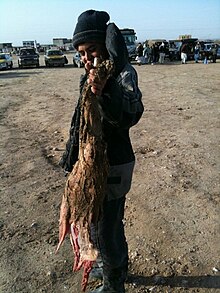
    The carcass of a headless goat used in Buzkashi

    Competition is typically fierce. Prior to the establishment of official rules by the Afghan Olympic Federation the sport was mainly conducted based upon rules such as not whipping a fellow rider intentionally or deliberately knocking him off his horse. Riders usually wear heavy clothing and head protection to protect themselves against other players' whips and boots. The boots usually have high heels that locks into the paddle of the horse to help the rider lean on the side of the horse while trying to pickup the calf. Games can last for several days, and the winning team receives a prize, not necessarily money, as a reward for their win. Top players, such as Aziz Ahmad, are often sponsored by wealthy Afgans.
    A Buzkashi player is called a Chapandaz. It is mainly believed in Afghanistan that a skillful Chapandaz is usually in his forties. This is based on the fact that the nature of the game requires its player to undergo severe physical practice and observation. Similarly horses used in Buzkashi also undergo severe training and due attention. A player doesn't necessarily own the horse. Horses are usually owned by landlords and highly rich people wealthy enough to look after and provide for training facilities for such horses. However a master Chapandaz can choose to select any horse and the owner of the horse usually wants his horse to be ridden by a master Chapandaz as a winning horse also brings pride to the owner.
    The game consists of two main forms: Tudabarai and Qarajai. Tudabarai is considered to be the simpler form of the game. In this version, the goal is simply to grab the calf and move in any direction until clear of the other players. In Qarajai, players must carry the carcass around a flag or marker at one end of the field, then throw it into a scoring circle (the "Circle of Justice") at the other end. The riders will carry a whip, often in their teeth, to fend off opposing horses and riders.
    Buzkashi is often compared to polo. Both games are played between people on horseback, both involve propelling an object toward a goal, and both get fairly rough. However, polo is played with a ball, while Buzkashi is played with a dead animal. Polo matches are played for fixed periods totaling about an hour; traditional Buzkashi may continue for days, but in its more regulated tournament version also has a limited match time.
    The calf in a Buzkashi game is normally beheaded and disemboweled and has its limbs cut off at the knees. It is then soaked in cold water for 24 hours before play to toughen it. Occasionally sand is packed into the carcass to give it extra weight. Players may not strap the calf to their bodies or saddles. Though a goat is used when no calf is available, a calf is less likely to disintegrate during the game.
    A game of kokpar

    Rules introduced by Afghan Olympic Federation
    1. The ground has a square layout with each side 400 meters long.
    2. Each team consists of 10 riders each.
    3. Only five riders from each team can play in a half.
    4. The total duration of each half is 45 minutes.
    5. There is only one 15 minute break between the two halves.
    6. The game is supervised by a referee.
    7. Based on the referee's decision a rider can be substituted during the game.

    A similar game is "kokpar", a traditional Kazakh game played on horseback in which two teams of players compete to carry a headless goat carcass into a goal.